Rabbi Hab Li Min Ladunka Dua is a Quranic supplication associated with Prophet Zakariya (AS). In Surah Ali ‘Imran, he asks Allah to grant him righteous offspring. This dua is especially meaningful for those who hope to have children and wish for a family blessed with faith and goodness. The phrase is part of a longer supplication in which Prophet Zakariya (AS) asks Allah for a good child and acknowledges that Allah hears every prayer.
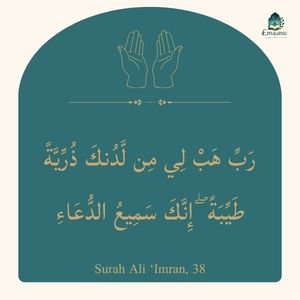
Rabbi Hab Li Min Ladunka Dua in Arabic
رَبِّ هَبْ لِي مِن لَّدُنكَ ذُرِّيَّةً طَيِّبَةً ۖ إِنَّكَ سَمِيعُ الدُّعَاءِ
Transliteration
Rabbi hab li min ladunka dhurriyyatan tayyibatan, innaka sami’ud-du’a.
English Translation
“My Lord, grant me from Yourself good offspring. Indeed, You are the Hearer of supplication.”
The phrase Rabbi Hab Li Min Ladunka means “My Lord, grant me from Yourself.” In this verse, it is followed by a request for dhurriyyatan tayyibah, meaning good or righteous offspring. For the complete meaning, it is important to read the entire supplication rather than the opening phrase alone.
Rabbi Hab Li Min Ladunka Word-by-Word Meaning
Understanding the individual words can help you memorize the dua and appreciate its meaning.
| Arabic | Transliteration | Meaning |
|---|---|---|
| رَبِّ | Rabbi | My Lord |
| هَبْ | Hab | Grant or bestow |
| لِي | Li | To me |
| مِن لَّدُنكَ | Min ladunka | From Yourself |
| ذُرِّيَّةً | Dhurriyyatan | Offspring or descendants |
| طَيِّبَةً | Tayyibatan | Good, pure, or righteous |
| إِنَّكَ | Innaka | Indeed, You |
| سَمِيعُ | Sami’u | Hearer |
| الدُّعَاءِ | Ad-du’a | Of supplication |
The phrase min ladunka expresses a request for a gift from Allah. The word dhurriyyah refers to offspring or descendants, while tayyibah describes them as good. Together, these words express a sincere request for righteous offspring and an acknowledgment that Allah hears supplications.
Rabbi Hab Li Min Ladunka Dua Reference in the Quran
The complete dua appears in Surah Ali ‘Imran, verse 38.
The verse describes Prophet Zakariya (AS) making supplication to Allah. He asks for good offspring and ends his prayer by acknowledging that Allah hears supplications.
Arabic:
هُنَالِكَ دَعَا زَكَرِيَّا رَبَّهُ ۖ قَالَ رَبِّ هَبْ لِي مِن لَّدُنكَ ذُرِّيَّةً طَيِّبَةً ۖ إِنَّكَ سَمِيعُ الدُّعَاءِ
Transliteration:
Hunalika da’a Zakariyya rabbahu, qala Rabbi hab li min ladunka dhurriyyatan tayyibatan, innaka sami’ud-du’a.
English Translation:
“At that time Zakariya called upon his Lord, saying, ‘My Lord, grant me from Yourself good offspring. Indeed, You are the Hearer of supplication.’”
Reference: Surah Ali ‘Imran 3:38.
This supplication appears in the account surrounding Maryam (AS). When Prophet Zakariya (AS) saw the provision Allah granted her, he turned to his Lord in prayer. The following verses describe the glad tidings he received.
Rabbi Hab Li Min Ladunka Meaning in English
The meaning of Rabbi Hab Li Min Ladunka, in the context of Surah Ali ‘Imran 3:38, is a request to Allah to grant good offspring from His grace.
The full dua contains three main parts:
Rabbi hab li min ladunka dhurriyyatan tayyibah: My Lord, grant me from Yourself good offspring.
Innaka sami’u: Indeed, You are the Hearer.
Ad-du’a: Of supplication.
Prophet Zakariya (AS) was asking Allah for a child who would be a blessing. His words show that he turned to Allah with hope and trusted that his prayer would be heard.
The dua is not simply about asking for a child. It also emphasizes the quality of the offspring being requested. The word tayyibah conveys goodness and purity, making this a supplication for righteous offspring rather than merely for parenthood.
Muslims who recite this dua can reflect on its message by asking Allah for children who grow up with faith, good character, and a desire to do what is right.
The Story Behind Rabbi Hab Li Min Ladunka Dua
Understanding the story of Prophet Zakariya (AS) helps explain why this dua is meaningful to Muslims who pray for righteous children.
Prophet Zakariya witnessed Allah’s provision for Maryam
Surah Ali ‘Imran describes Maryam (AS) and the care she received. Prophet Zakariya (AS) would find provision with her and ask where it came from. She explained that it was from Allah, who provides for whom He wills without measure.
This event is described in Surah Ali ‘Imran 3:37.
The passage then tells us that Prophet Zakariya (AS) called upon his Lord. His supplication for good offspring comes directly after this account.
He asked Allah for good offspring
Prophet Zakariya (AS) prayed:
“Rabbi hab li min ladunka dhurriyyatan tayyibatan, innaka sami’ud-du’a.”
He asked Allah for offspring characterized by goodness. His words demonstrate hope in Allah’s generosity and a desire for a child who would be a blessing.
Allah gave him glad tidings of Yahya
In the next verse, Surah Ali ‘Imran 3:39, the angels gave Prophet Zakariya (AS) glad tidings of Yahya (AS), who would confirm a word from Allah, be noble and chaste, and be a prophet among the righteous. This account shows that Allah answered Zakariya’s supplication with the glad tidings of a son, Yahya (AS).
The story teaches believers to turn to Allah with sincere hope. However, it should not be interpreted as a guarantee that reciting this dua a particular number of times will result in pregnancy or a child.
Benefits of Rabbi Hab Li Min Ladunka Dua
The Quran does not prescribe a fixed repetition count for this dua or promise a particular outcome from reciting it. However, its wording and context offer several valuable spiritual lessons.
1. It teaches us to ask Allah for righteous offspring
The dua asks for dhurriyyatan tayyibah, or good offspring. It reminds parents and those hoping to become parents to ask not only for children but also for goodness, faith, and upright character.
2. It reminds us that Allah hears our supplications
The words innaka sami’ud-du’a mean “Indeed, You are the Hearer of supplication.” This ending emphasizes that Allah hears those who call upon Him.
3. It encourages hope in Allah’s generosity
The phrase min ladunka expresses a request for a gift from Allah Himself. It encourages believers to turn to Him with hope while recognizing that His wisdom and timing are beyond our knowledge.
4. It provides a Quranic supplication for those hoping for children
Those who wish to become parents can use this dua in their personal supplications. Its wording specifically asks Allah for good offspring.
5. It emphasizes the importance of a child’s character
The dua does not simply ask for descendants. It asks for tayyibah offspring, emphasizing goodness. This can remind parents to pray for their children’s faith, character, and well-being.
6. It teaches us to make dua with humility
Prophet Zakariya (AS) turned to Allah and asked for what he needed. His example encourages believers to acknowledge their dependence on Allah rather than assuming that everything is within their own control.
7. It encourages trust in Allah while taking practical steps
Making dua can accompany appropriate practical efforts. Those who hope to have children can pray while also seeking suitable medical guidance if needed. The supplication does not replace medical care or guarantee a particular result.
These are lessons drawn from the Quranic verse and its context. They should not be presented as guaranteed worldly effects of reciting the dua.
Explore More: Islamic Bio for Instagram in English: 100+ Ideas
When Can You Recite Rabbi Hab Li Min Ladunka Dua?
You can recite this dua whenever you wish to ask Allah for righteous offspring. The verse does not restrict it to a particular time of day.
Here are some situations in which its meaning may be especially relevant:
When praying for children: You can recite it in your personal supplications while asking Allah to grant you righteous offspring.
When hoping to start a family: The dua gives you Quranic words to express your hope and dependence on Allah.
During personal dua: Include it whenever you wish to ask Allah for a blessing in your family life.
When praying for your children: You may reflect on its emphasis on good offspring and ask Allah to guide your children toward faith and good character.
When learning Quranic supplications: Memorize the Arabic and understand its context in the story of Prophet Zakariya (AS).
You do not need to wait for a particular occasion to make this supplication. You may ask Allah for righteous offspring whenever you wish.
Explore More: Proud to Be Muslim Bio for Instagram: 100+ Ideas
How to Recite Rabbi Hab Li Min Ladunka Dua Properly
You can make this supplication part of your personal dua by learning its words and understanding what they mean.
1. Learn the complete Arabic dua
The phrase Rabbi Hab Li Min Ladunka is the beginning of the request, but the full verse includes the words dhurriyyatan tayyibatan and innaka sami’ud-du’a. Learning the complete supplication helps preserve its intended meaning.
2. Understand the meaning
Remember that Prophet Zakariya (AS) asked Allah for good offspring and acknowledged that Allah hears supplications. Reflecting on this meaning can make the dua more meaningful.
3. Ask Allah sincerely
Make the dua with humility and hope. You can also express your needs in your own words when making personal supplication.
4. Pray for goodness, not only for a particular outcome
The wording asks for righteous offspring. Reflect on the importance of faith, good character, and well-being when praying for children.
5. Combine supplication with appropriate effort
If you are hoping to become a parent, you can make dua while also seeking appropriate advice and support. Trust in Allah does not require avoiding practical steps.
Is there a specific number of times to recite Rabbi Hab Li Min Ladunka?
Surah Ali ‘Imran 3:38 does not prescribe a specific number of repetitions. You may recite the dua as often as you wish in personal supplication, but do not treat an unsupported count as a religious requirement or a guarantee of pregnancy or any other outcome.
Lessons from Rabbi Hab Li Min Ladunka Dua
The supplication of Prophet Zakariya (AS) contains lessons about prayer, hope, and the importance of righteous offspring.
Ask Allah for goodness in what you seek
The dua asks for good offspring, not merely offspring. This reminds us to think carefully about the blessings we ask for and to seek what is beneficial.
Recognize that Allah hears your prayers
The ending of the dua affirms that Allah hears supplication. Believers can take comfort in turning to Him, even when they do not know how their circumstances will unfold.
Remain hopeful without expecting guaranteed outcomes
The story of Zakariya (AS) encourages believers to ask Allah with sincerity. At the same time, we should not assume that a particular dua or repetition count guarantees the same outcome for every person.
Pray for your children’s faith and character
For parents, the dua is a reminder to ask Allah to help their children grow in goodness, faith, and upright character.
Combine dua with responsibility
Prayer and practical effort can go together. Those hoping to build a family can make supplication while also taking appropriate steps to care for their physical, emotional, and family well-being.
Frequently Asked Questions About Rabbi Hab Li Min Ladunka Dua
What is Rabbi Hab Li Min Ladunka dua in Arabic?
The complete dua is:
رَبِّ هَبْ لِي مِن لَّدُنكَ ذُرِّيَّةً طَيِّبَةً ۖ إِنَّكَ سَمِيعُ الدُّعَاءِ
It means, “My Lord, grant me from Yourself good offspring. Indeed, You are the Hearer of supplication.” It appears in Surah Ali ‘Imran 3:38.
What does Rabbi Hab Li Min Ladunka mean?
The phrase means “My Lord, grant me from Yourself.” In Surah Ali ‘Imran 3:38, it is followed by a request for good offspring, making the full supplication a prayer for righteous children.
Who made Rabbi Hab Li Min Ladunka dua?
Prophet Zakariya (AS) made this supplication, as recorded in Surah Ali ‘Imran 3:38. He asked Allah for good offspring, and the following verse gives the glad tidings of Yahya (AS).
Which surah contains Rabbi Hab Li Min Ladunka?
The complete dua appears in Surah Ali ‘Imran, verse 38, the third chapter of the Quran.
Can I recite Rabbi Hab Li Min Ladunka to pray for a child?
Yes. The full supplication specifically asks Allah for good offspring, so you can recite it in your personal dua when praying for a child. However, reciting it does not guarantee pregnancy or a particular outcome.
How many times should I recite Rabbi Hab Li Min Ladunka?
The Quran does not prescribe a fixed number of repetitions for this dua. You can recite it as often as you wish without treating a particular count as required or as a guarantee of a result.
Can I recite Rabbi Hab Li Min Ladunka after salah?
Yes. You may include it in your personal supplications after salah. The verse does not, however, prescribe a special post-prayer count or make it compulsory to recite after every prayer.
Is Rabbi Hab Li Min Ladunka a dua for righteous children?
Yes. In its complete Quranic context, the dua asks Allah for dhurriyyatan tayyibah, meaning good or righteous offspring. It is a suitable Quranic supplication for those asking Allah for children who grow in goodness.
What is the difference between Rabbi Hab Li Min Ladunka and Rabbi Habli Minas Saliheen?
Both are Quranic supplications associated with asking Allah for offspring, but they have different wording and references. Rabbi Hab Li Min Ladunka Dhurriyyatan Tayyibah appears in Surah Ali ‘Imran 3:38 and is the dua of Prophet Zakariya (AS). Rabbi Habli Minas Saliheen appears in Surah As-Saffat 37:100 and is the supplication of Prophet Ibrahim (AS).
Does Rabbi Hab Li Min Ladunka guarantee pregnancy?
No such guarantee is stated in the verse. The dua teaches believers to ask Allah for good offspring, but it does not promise pregnancy after a specific number of recitations. Those experiencing fertility concerns may make dua while also seeking appropriate medical guidance.
Conclusion on Rabbi Hab Li Min Ladunka Dua
Rabbi Hab Li Min Ladunka dua is a meaningful Quranic supplication found in Surah Ali ‘Imran 3:38. Prophet Zakariya (AS) used it to ask Allah for good offspring and affirmed that Allah hears every supplication.
You can memorize the full Arabic dua, understand its meaning, and include it in your personal prayers when asking Allah for righteous children. Its message is not about a guaranteed result or a special repetition count, but about sincere supplication, hope, and reliance on Allah.
May Allah grant us beneficial blessings, bless families with goodness, and guide our children and descendants toward faith and righteous character. Ameen.