Rabbi Anni Massaniyad Durru Dua
When life becomes difficult, illness lingers, or hardships seem never-ending, many Muslims turn to the beautiful dua of Prophet Ayyub (AS). Among the most powerful supplications in the Quran is Rabbi Anni Massaniyad Durru Dua, a heartfelt prayer that reflects patience, humility, and complete trust in Allah. Prophet Ayyub (AS) endured years of severe illness, loss of wealth, and separation from his loved ones. Despite these unimaginable trials, he never complained about Allah’s decree. Instead, he turned to his Lord with sincerity and made this short yet profound dua, acknowledging his suffering while placing his hope entirely in Allah’s infinite mercy.
Today, this Quranic supplication continues to inspire Muslims around the world. It reminds us that no matter how difficult our circumstances may be, Allah hears every prayer and responds in the best way and at the best time. In this guide, you’ll learn the Rabbi Anni Massaniyad Durru Dua in Arabic, transliteration, English translation, word-by-word meaning, Quran reference, and the powerful lessons we can learn from Prophet Ayyub’s unwavering patience.
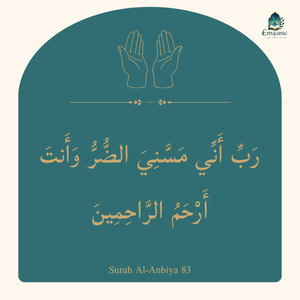
Rabbi Anni Massaniyad Durru Dua in Arabic
رَبِّ أَنِّي مَسَّنِيَ الضُّرُّ وَأَنتَ أَرْحَمُ الرَّاحِمِينَ
Rabbi Anni Massaniyad Durru Transliteration
Rabbi anni massaniyaḍ-ḍurru wa anta arhamur rahimin.
Rabbi Anni Massaniyad Durru English Translation
“My Lord, indeed adversity has touched me, and You are the Most Merciful of those who show mercy.”
Word-by-Word Meaning
| Arabic | Meaning |
|---|---|
| رَبِّ (Rabbi) | My Lord |
| أَنِّي (Anni) | Indeed, I |
| مَسَّنِيَ (Massaniya) | Has touched me |
| الضُّرُّ (Ad-Durru) | Hardship, harm, suffering |
| وَأَنتَ (Wa Anta) | And You are |
| أَرْحَمُ (Arhamu) | The Most Merciful |
| الرَّاحِمِينَ (Ar-Rahimeen) | Of those who show mercy |
Quran Reference
This beautiful supplication appears in Surah Al-Anbiya (21:83).
“And (remember) Ayyub when he called to his Lord, ‘Indeed, adversity has touched me, and You are the Most Merciful of the merciful.'”
— Surah Al-Anbiya (21:83)
Immediately after this verse, Allah tells us that He answered Prophet Ayyub’s prayer, removed his suffering, restored his health, and blessed him with his family and many more blessings. This serves as a timeless reminder that sincere patience and trust in Allah are never without reward.
Who Said This Dua?
This dua was made by Prophet Ayyub (Job, peace be upon him), one of the noble prophets mentioned in the Quran.
Prophet Ayyub (AS) is remembered for his extraordinary patience. Allah blessed him with wealth, children, good health, and a respected position among his people. Over time, he was tested with the loss of nearly everything he possessed. He lost his wealth, his children, and eventually suffered from a prolonged illness.
Despite years of hardship, Prophet Ayyub (AS) never lost faith in Allah. He remained grateful, continued worshipping his Lord, and avoided words of complaint. When he finally raised his hands in dua, his prayer was not one of despair but one of hope and humility:
“My Lord, indeed adversity has touched me, and You are the Most Merciful of those who show mercy.”
This gentle supplication reflects complete reliance on Allah. Rather than demanding relief, Prophet Ayyub (AS) simply presented his condition before his Lord, knowing that Allah’s mercy is greater than every hardship.
What Does Rabbi Anni Massaniyad Durru Dua Mean?
At first glance, this dua appears very short. However, its meaning carries profound lessons about patience, faith, and the etiquette of making dua.
Instead of saying, “Remove my suffering,” Prophet Ayyub (AS) simply acknowledged his hardship:
“Indeed, adversity has touched me…”
Then, he praised Allah by saying:
“…and You are the Most Merciful of those who show mercy.”
This teaches us an important principle of dua: begin by recognizing Allah’s perfect attributes and place your complete trust in His wisdom and mercy. Sometimes, the most sincere prayer is not one filled with many words but one spoken with complete reliance on Allah. For anyone facing illness, emotional pain, financial hardship, family difficulties, or personal struggles, this Quranic dua serves as a powerful reminder that Allah’s mercy is always greater than our trials.
The Story Behind Rabbi Anni Massaniyad Durru Dua
To truly appreciate the beauty of this dua, it’s important to understand the remarkable story of Prophet Ayyub (AS). His life is one of the greatest examples of patience (Sabr) and unwavering trust in Allah. Allah had blessed Prophet Ayyub (AS) with many favors. He enjoyed good health, a loving family, abundant wealth, and respect among his people. Yet, like all prophets, he was tested.
Over time, Prophet Ayyub (AS) lost his wealth. His livestock and possessions were gone. He then suffered the heartbreaking loss of his children. As if that were not enough, he was afflicted with a severe illness that lasted for many years. Despite facing one hardship after another, Prophet Ayyub (AS) never questioned Allah’s wisdom or complained about His decree. He remained patient, continued worshipping Allah, and trusted that every trial had a purpose.
When the hardship became overwhelming, he turned to Allah with humility and made this beautiful dua:
“My Lord, indeed adversity has touched me, and You are the Most Merciful of those who show mercy.”
Notice that he did not demand a cure or ask, “Why is this happening to me?” Instead, he acknowledged his situation and placed his complete hope in Allah’s mercy. Allah accepted his sincere supplication, restored his health, returned his family, blessed him with more children, and replaced his losses with even greater blessings. His story remains an enduring reminder that patience and trust in Allah are always rewarded, even if the answer comes later than we hope.
Lessons We Learn from Rabbi Anni Massaniyad Durru Dua
Although this dua contains only a few words, it teaches valuable lessons that every Muslim can apply.
1. Turn to Allah Before Anyone Else
During times of hardship, it’s natural to seek help from family, friends, or professionals. While taking practical means is encouraged, our first and greatest reliance should always be on Allah.
This dua reminds us that the One who created every difficulty is also the One who can remove it.
2. Patience Is a Sign of Strong Faith
Prophet Ayyub (AS) endured years of suffering without losing hope. His patience wasn’t passive—it was active trust in Allah’s wisdom while continuing to worship Him.
His story teaches us that patience is not about pretending life is easy. It is about remaining faithful even when life is difficult.
3. Allah’s Mercy Is Greater Than Every Hardship
The dua ends by mentioning one of Allah’s beautiful attributes:
“You are the Most Merciful of those who show mercy.”
This reminds us to focus on Allah’s mercy rather than the size of our problems. No matter how great the hardship, Allah’s mercy is always greater.
4. Speak to Allah with Humility
One of the most beautiful aspects of this dua is its etiquette.
Prophet Ayyub (AS) did not complain.
He did not question Allah.
He did not express frustration.
Instead, he humbly presented his condition before his Lord.
This teaches us to make dua with respect, humility, and hope.
5. Every Test Has Wisdom
Trials are never meaningless. They can purify sins, increase patience, strengthen faith, and bring us closer to Allah.
Sometimes the greatest blessings come after the greatest tests.
The story of Prophet Ayyub (AS) is a perfect example of this truth.
Benefits of Rabbi Anni Massaniyad Durru Dua
Many Muslims recite this dua during times of illness or hardship. While the Quran tells us that Allah answered Prophet Ayyub’s supplication, we should avoid claiming specific rewards or guarantees unless they are supported by authentic evidence.
Here are some authentic benefits we can derive from this Quranic supplication:
It reminds us to place our trust in Allah.
Every time you recite this dua, you acknowledge that ultimate help comes from Allah alone.
It encourages patience during difficult times.
This supplication inspires believers to remain hopeful instead of giving in to despair.
It strengthens hope in Allah’s mercy.
Rather than focusing only on hardship, the dua shifts our attention toward Allah’s limitless mercy.
It is a Quranic dua.
Since it comes directly from the Quran, Muslims are encouraged to recite and reflect upon it as part of their personal supplications.
It teaches beautiful manners of making dua.
The supplication combines honesty about one’s struggles with praise of Allah, making it a timeless example of sincere prayer.
When Should You Recite Rabbi Anni Massaniyad Durru Dua?
There is no authentic narration specifying a particular number of times, day, or occasion for reciting this dua.
However, because it is a Quranic supplication, you may recite it whenever you sincerely need Allah’s help.
Many Muslims find comfort in reciting it during:
Times of illness
Emotional distress
Financial hardship
Family problems
Personal struggles
Moments of sadness or anxiety
After obligatory or voluntary prayers
During Tahajjud
While making personal dua
Remember that the power of dua lies not in repeating a specific number without evidence, but in sincerity, humility, and trust in Allah.
How to Make This Dua More Meaningful
Simply memorizing the words is beneficial, but understanding their meaning makes the supplication even more powerful.
When you recite this dua:
Reflect on Prophet Ayyub’s patience.
Remember Allah’s infinite mercy.
Ask Allah with complete sincerity.
Have good expectations of your Lord.
Continue taking lawful means while trusting Allah with the outcome.
The more you understand the message behind this dua, the more deeply it will resonate in your heart.
Reflect on the Message of This Dua
Life is full of unexpected challenges. At times, we may feel overwhelmed by illness, loss, disappointment, or uncertainty. In those moments, the dua of Prophet Ayyub (AS) reminds us that we are never alone. Instead of allowing hardship to distance us from Allah, let it become a reason to turn back to Him with humility and hope. Just as Allah answered the sincere prayer of Prophet Ayyub (AS), He hears every sincere supplication made by His servants. Trust His wisdom, remain patient, and remember that His mercy reaches beyond what we can see.
Frequently Asked Questions About Rabbi Anni Massaniyad Durru Dua
What is Rabbi Anni Massaniyad Durru Dua?
Rabbi Anni Massaniyad Durru Dua is a Quranic supplication made by Prophet Ayyub (AS) during a time of severe hardship and illness. In this dua, Prophet Ayyub (AS) acknowledges his suffering and turns to Allah’s mercy, saying that Allah is the Most Merciful of those who show mercy.
This dua is mentioned in Surah Al-Anbiya (21:83) and is a beautiful example of patience, humility, and trust in Allah.
What is the meaning of Rabbi Anni Massaniyad Durru?
The meaning of Rabbi Anni Massaniyad Durru is:
“My Lord, indeed adversity has touched me, and You are the Most Merciful of those who show mercy.”
The dua expresses a believer’s dependence on Allah during difficult times while recognizing Allah’s perfect mercy.
Which Prophet recited Rabbi Anni Massaniyad Durru Dua?
This dua was recited by Prophet Ayyub (AS).
Prophet Ayyub (AS) is known for his extraordinary patience during long periods of hardship. His story teaches believers the importance of remaining hopeful, patient, and connected to Allah even during the most challenging moments.
Where is Rabbi Anni Massaniyad Durru Dua mentioned in the Quran?
This dua is mentioned in:
Surah Al-Anbiya (21:83)
Allah says:
“And [mention] Ayyub, when he called to his Lord, ‘Indeed, adversity has touched me, and You are the Most Merciful of the merciful.'”
Can I recite Rabbi Anni Massaniyad Durru Dua for healing?
Yes, you may recite this Quranic dua while asking Allah for healing and relief from difficulties. Prophet Ayyub (AS) made this supplication during his illness, and Allah responded to his prayer.
However, Muslims should remember that healing comes only from Allah, and this dua should be made with sincerity, patience, and trust in His wisdom.
How many times should I recite Rabbi Anni Massaniyad Durru Dua?
There is no authentic evidence that specifies a fixed number of times this dua must be recited.
You may recite it whenever you wish, especially during times of hardship, illness, sadness, or when seeking Allah’s help. The most important part of dua is sincerity and a sincere heart.
Is Rabbi Anni Massaniyad Durru Dua only for illness?
No. Although Prophet Ayyub (AS) made this dua during illness, its meaning applies to many forms of hardship.
A person can turn to Allah with this dua during:
Physical illness
Emotional struggles
Financial difficulties
Family problems
Stress and worries
Any personal hardship
The dua teaches us to seek Allah’s mercy in every situation.
What lesson does Prophet Ayyub’s dua teach us?
The dua of Prophet Ayyub (AS) teaches us that:
Allah always hears sincere prayers.
Hardships are temporary.
Patience brings reward.
Allah’s mercy is greater than our problems.
A believer should never lose hope in Allah.
Final Thoughts on Rabbi Anni Massaniyad Durru Dua
The dua Rabbi Anni Massaniyad Durru is a beautiful reminder that hardship does not mean Allah has abandoned us. The story of Prophet Ayyub (AS) shows us that true patience is remaining connected to Allah even when life becomes difficult. This short but powerful Quranic supplication teaches us how to turn our pain into a conversation with our Creator. It reminds us that Allah knows our struggles, hears our prayers, and His mercy is always near.
When facing challenges, remember the words of Prophet Ayyub (AS):
“My Lord, indeed adversity has touched me, and You are the Most Merciful of those who show mercy.”
May Allah grant us patience during trials, increase us in beneficial knowledge, and make us among those who always turn to Him in every situation.
Ameen.